A Creative Response
I was deeply moved by many of the poems in Sarah Blake’s book Don’t Let Me Be Lonely. Some reminded me of similar situational or emotional experiences I’ve had as a mother, while others, like “The Starship,” provided the opportunity to consider the choices that each of us makes to either rebel against or become complicit with the atrocities of our world. For me, however, the most impactful of Blake’s poems are those that strike a precise balance between providing and withholding information, a poetic technique that I’ve witnessed being used by a number of the contemporary poets. The gap created between the known and the unknown is a void that calls to be filled. It draws the reader in, creates an opportunity for engagement, and a pathway for moving from the role of passive bystander to that of an active consumer. Blake’s poem “The Safety of Women” accomplishes this through the use of startling reminders and disturbing statements which act as the catalyst for personal investigation and reflection.
Blake’s poem “The Safety of Women,” compelled me to explore the topic of violence against women on a more statistical level and inspired me to write creatively in response to that experience. The creative response above depicts the mental conversation generated as a result of this experience. The left-justified passages in are my thoughts in response to the research I conducted; the bolded information is gathered from sources like the US Census, The National Coalition Against Domestic Abuse, and other non-profit organizations dedicated to supporting the victims of abuse. The centered passages depict my poetic persona interacting with the persona (italicized) of Blake’s poem “The Safety of Women.” The voices of each of these sections intertwine and play off each other to demonstrate the enriched and impactful experience had by the reader who takes the time to fill the void provided by the poet. The intention of the images at the end of the response is to put faces to the abuse and make these statistics more corporeal. The faces that make up the collage could be anyone, your friend, your coworker, your neighbor, your relative. Its placement after Blake’s words, “the shell of me resembles nothing you could touch me to with words” (Blake 20), is a reminder that looks can be deceiving; the surface does not always reflect the experience of pain and suffering. The last stanza of the response includes a safety exit button for those who may be reading this response in an unsafe environment. The safety exit button provides a quick removal from sites that could incite the anger of the abuser.
Warning: This post may cause emotional distress.

Warning: Being born a woman will cause emotional distress.
In the United States, 50.8% of the population is female (US Census). If my math is correct, according to the 2010 census that 50.8% is equivalent to 179,072,412 individuals (females), of whom I am one.
179,072,412
individuals with a shared experience
me too, me too, me too

Did you know?
Women are not often killed in the street. (Blake 20)
That’s good, right?

Did you know?
They are most often killed in the home. (20)
Let that sink in.
- 1 in 2 female murder victims are killed by intimate partners
- 65% of murder-suicide are perpetrated by intimate partners
- 96% of murder-suicide victims are female
- Intimate partner femicide has increased in recent years
(NCADV Domestic Violence)
At every doctor’s appointment, I’m asked,
Do you feel safe at home?  (Blake 20)
- Are you?
Despite recommendations from various health organizations such as the World Health Organization (WHO), Centers for Disease Control (CDC), and The American College of Obstetricians and Gynecologists (ACOG), women are very often NOT screened for domestic abuse. Here are some frequently given reasons for this failure:
- “Time constraints” – one person’s is time being valued over another’s life?
- “Discomfort with the topic” – because abuse isn’t uncomfortable? Because a gynecological exam isn’t uncomfortable…
- “Fear of offending the patient” – this just sounds like an excuse to avoid the “discomfort.”
- “Need for privacy” – there is nothing private about a gynecological exam (Thurrott)
The woman
who should answer, No, most likely ends up
dead—shot, if we’re going to be specific. (Blake 20)
So let’s be specific:
- 35% of all women killed by men are killed by intimate partners with guns.
- An abuser’s access to firearms increases the risk of femicide by at least 400%.
- Domestic violence incidents involving firearms are 12 times more likely to result in death.
- Women in the US are 11 times more likely to be killed by a gun than in any other high-income nation.
(NCADV Guns and Domestic Violence)
And I want to be specific, when every vague
word seems to hurt me, (Blake 20)
It’s not just the sticks and stones…
Perpetrators use psychological abuse to control, terrorize, and denigrate their victims. It frequently occurs prior to or concurrently with physical or sexual abuse.
- 48.4% of women have experienced at least one psychologically aggressive behavior by an intimate partner.
- 4 in 10 women have experienced at least one form of coercive control by an intimate partner in their lifetime.
- 17.9% of women have experienced a situation where an intimate partner tried to keep them from seeing family and friends.
- 18.7% of women have experienced threats of physical harm by an intimate partner.
- 95% of men who physically abuse their intimate partners also psychologically abuse them.
- Women who earn 65% or more of their households’ income are more likely to be psychologically abused than women who learn less than 65% of their households’ income.
(NCADV Facts about Violence and Psychological Abuse)
                      when it’s thought
the surface speaks to everything needed
to be said because the woman works

on her surface alone. (Blake 20)
Deceiving are appearances, the adage says,
don’t judge a book by its cover.

All this we know yet ignore
choosing the easy aesthetic of air-brushed selfies
over the unvarnished truth.

Reality.
The signs of abuse are varied.
Some are more visible than others:
- Black eyes
- Bruises on the arms
- Busted lips
- Red or purple marks on the neck
- Sprained wrists
- Agitation, anxiety, or constant apprehension
- Changes in sleep habits (sleeping too much or not enough)
- Developing a drug or alcohol problem
- Extremely apologetic or meek
- Loss of interest in daily activities
- Low self-esteem
- Seeming fearful
- Displaying symptoms of depression
- Talking about or attempting suicide
- Becoming reserved and distant
- Isolating by cutting off contacts with friends and family members
- Canceling appointments or meetings at the last minute
- Dropping out of activities they would usually enjoy
- Exhibiting excessive privacy concerning their personal life or the person with whom they’re in a relationship
- Is often late to work or other appointments (T)
Look at my dancing
on my own skin. Even the shell of me

resembles nothing you could touch me to
with words. (Blake 20)
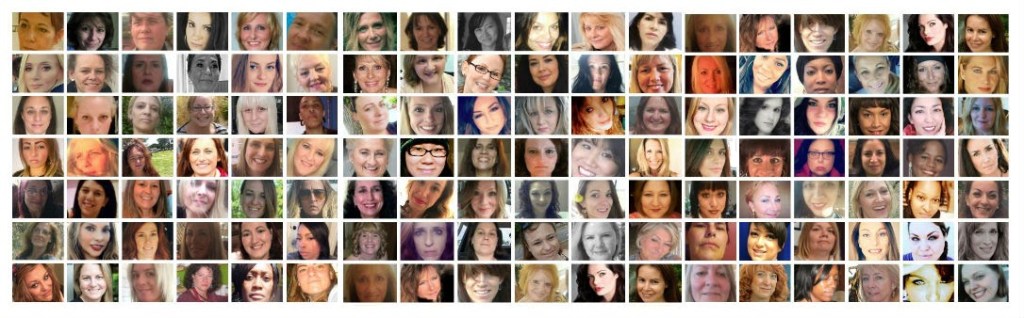
These are the faces of women, who in extricating themselves from an abusive relationship have lost custody of their children to that self-same abuser.
Warning: You are NOT safe.
Click the red “safety exit” button.
Remember to clear your browser history.

Reach out elsewhere, your hand. (Blake)
Sources Cited
Blake, Sarah. Let’s Not Live on Earth. Wesleyan University Press, 2018.
“Faces of The Crisis.” The Women’s Coalition, http://www.womenscoalitioninternational.org/faces-of-the-crisis.html.
National Coalition Against Domestic Violence. Facts About Domestic Violence and Psychological Abuse. 2020. Retrieved from https://assets.speakcdn.com/assets/2497/domestic_violence_and_psychological_abuse_ncadv.pdf
National Coalition Against Domestic Violence. Domestic Violence. 2020. Retrieved from https://assets.speakcdn.com/assets/2497/domestic_violence-2020080709350855.pdf?1596811079991.
National Coalition Against Domestic Violence. Guns and Domestic Violence. 2020. Retrieved from https://assets.speakcdn.com/assets/2497/guns_and_dv0.pdf
Thurrott, Stephanie. “Did Your Doctor Ask About Domestic Violence?” DomesticShelters.org, Theresa’s Fund, Inc, 14 Mar. 2021, http://www.domesticshelters.org/articles/ending-domestic-violence/did-your-doctor-ask-about-domestic-violence.
T, Buddy. “Do You Know the Warning Signs of Domestic Abuse?” Edited by Stephen Gans MD, Verywell Mind, Dotdash, 1 Mar. 2020, http://www.verywellmind.com/signs-someone-is-being-abused-66535.
“U.S. Census Bureau QuickFacts: United States.” Census Bureau QuickFacts, US Department of Commerce, http://www.census.gov/quickfacts/fact/table/US/LFE046219.
 For the Love of Books